
EMC SHIELDING FOR BUILDINGS
From the façade to the server room
With the ongoing digitalization and automation of buildings – especially smart buildings, industrial facilities and security‑critical infrastructures – the importance of electromagnetic compatibility (EMC) continues to grow. EMC shielding measures are essential to ensure the functionality, safety and confidentiality of technical systems. Shielding mesh integrates seamlessly into building structures and reliably protects sensitive systems from electromagnetic risks.
Why is EMC shielding in buildings necessary?
- Protection of critical systems
In hospitals, data centers or industrial facilities, electromagnetic interference can cause failures – ranging from data loss to situations that may endanger human lives. - Preventing interference from external sources
Cell towers, high‑voltage power lines or neighboring industrial facilities generate electromagnetic fields that can affect sensitive systems inside a building. - Ensuring the proper function of smart building technologies
Sensors, actuators and control devices often communicate wirelessly or via bus systems. EMC disturbances can interrupt or distort this communication. - Compliance with legal requirements and EMC standards
Standards such as the DIN EN 61000 series require EMC‑compliant planning and installation of electrical systems. Shielding solutions are a central part of fulfilling these requirements. - Protection against eavesdropping and data leakage
In sensitive areas – meeting rooms, government offices, research labs or military facilities – unintentional electromagnetic emissions pose a security risk. Targeted EMC shielding, e.g. with special wall materials, window films or shielded cables, significantly reduces the risk of eavesdropping or data extraction. This is crucial for data protection and preventing industrial espionage.
Applications Of Shielding Mesh In Buildings
Shielding mesh protects against electromagnetic fields (EMF) and helps create safe, interference-free environments.
Data Center
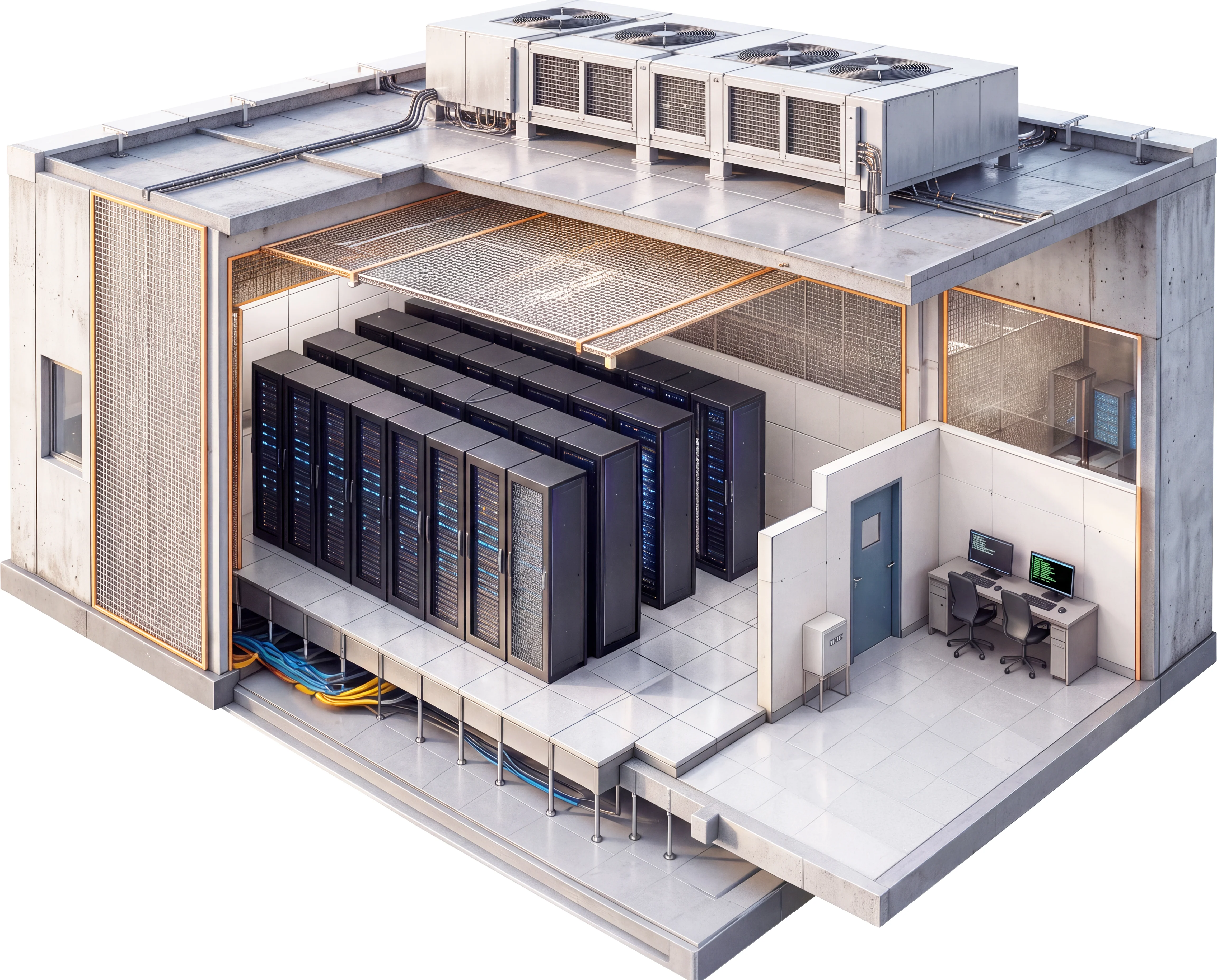
Exterior walls / façades
Protection against external electromagnetic interference and radiation emitted to the outside.
Interior walls / partition walls
Prevention of interference between sensitive areas.
Ceilings / suspended ceilings
Protection against electromagnetic radiation entering from above (e.g. mobile communications, radio signals).
Cable penetrations / openings
Continuous shielding performance at critical transitions and penetrations.
Server rack doors / enclosures
Reduction of radiation emitted from racks and electronic equipment.
Doppelböden / Hohlraumböden
Vermeidung elektromagnetischer Kopplungen über Kabel- und Versorgungswege.
Hospital
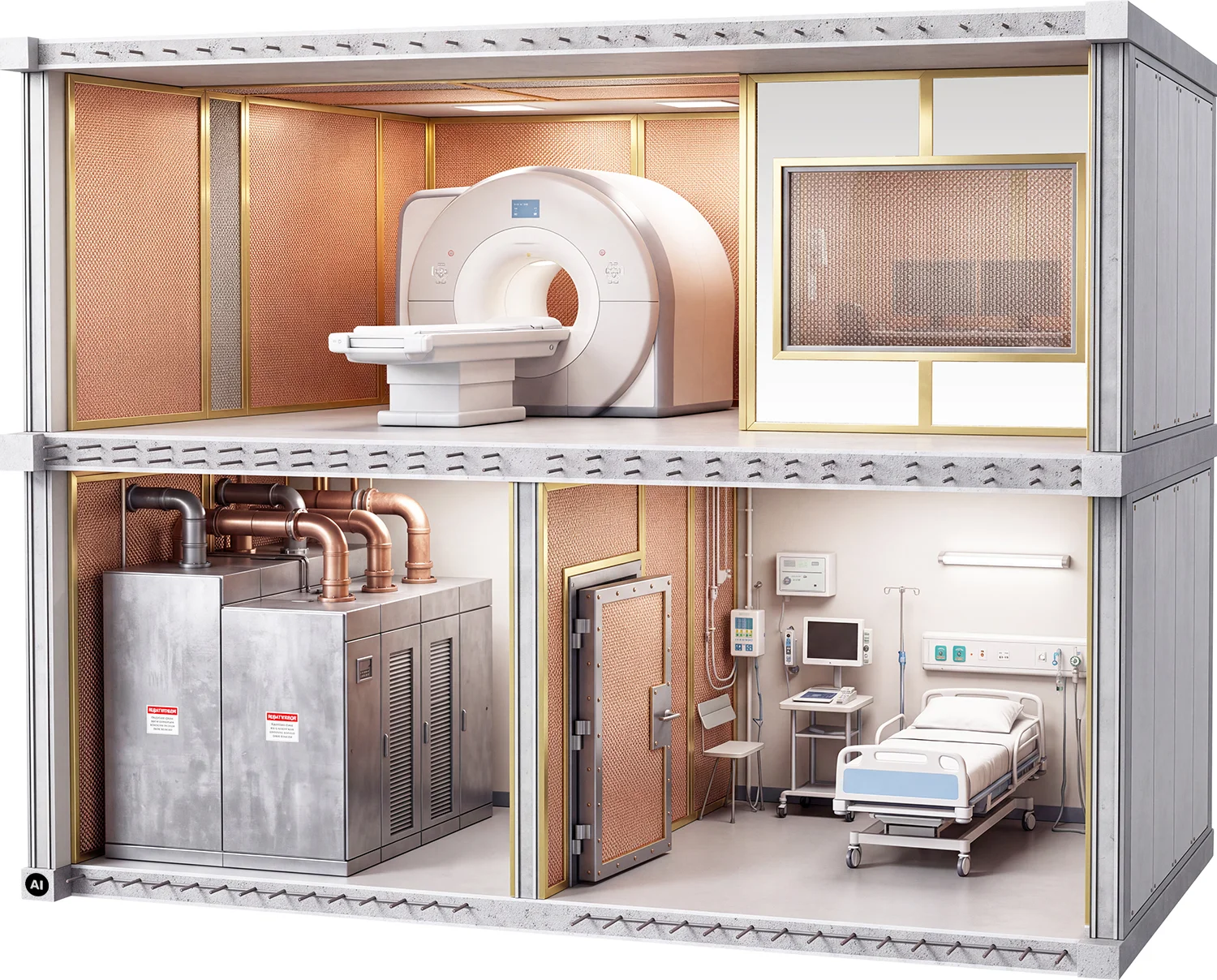
Walls in examination rooms
For example, MRI rooms: protection against interference and radiation leakage.
Ceilings
Protection against electromagnetic radiation entering from above.
Shielded viewing windows
Effective shielding while maintaining clear visibility.
Doors
Continuous shielding performance, even on moving elements.
Technical rooms
Protection of sensitive technical and server equipment from external electromagnetic influences.
Floors
Shielding around sensitive medical equipment and cable routes.
Vorteile von Abschirmgewebe

Effective protection against electromagnetic fields (EMF)

Reduced interference and system failures

Increased protection for people, equipment, and data

Flexible integration into walls, ceilings, doors, floors, and penetrations
Measures for electromagnetic compatibility in buildings
- Shielded cables and conductors
Reduce emissions and susceptibility to interference - EMC‑compliant installation
Separation of power and data lines, correct grounding and equipotential bonding - Room shielding
Use of EMC shielding mesh, metallic wall claddings or special construction materials for sensitive areas - EMC filters and surge protection
Protect against transient disturbances and lightning impulses - Shielded facades and roofs
Prevention of incoming or outgoing (interference) signals
Effective shielding in buildings requires a holistic approach. Proper grounding and sufficient overlap of all shielding materials are essential to create a continuous conductive structure and ensure a reliable Faraday cage effect. In practice, particular attention must be paid to typical weak points such as doors, windows and ventilation systems, which require specially designed shielding solutions to maintain overall performance.
FAQ – Frequently asked questions about EMC shielding in buildings
By adjusting mesh size, wire diameter and material selection, shielding mesh can be optimized for both high‑frequency and low‑frequency radiation. The choice of mesh is always tailored to the specific shielding requirements. Detailed performance data is available in our technical charts.
Thanks to its high flexibility, shielding mesh can be integrated into most existing structures. In practice, retrofitting shielding measures is primarily used to secure rooms and buildings.
 North American Website