

Cockburn Cement, a subsidiary of Adbri Ltd, is a leading supplier of cement products to the mining, agricultural, and construction industries in Western Australia. In 2017, the company awarded the contract for a new packaging line to global technology provider HAVER & BOECKER. While selecting the technology may have been straightforward, the installation presented significant challenges. Driven by innovative thinking and engineering expertise, the partnership overcame every constraint to complete one of HAVER & BOECKER's fastest-ever installations of a high-performance packaging line, all without any disruption to customer supply.
“The technology implemented in HAVER & BOECKER's designs sets them apart from the competition. Their machines are recognized worldwide and are used throughout our company and joint venture operations.” Adam Scata, Operations Manager, Cockburn Cement
Choosing the right technology partner
The Kwinana packaging facility is one of seven production and distribution sites operated by Cockburn Cement across Western Australia.
As the existing packaging machine for grey cement products and its associated palletizer approached the end of their service life in 2017, the company launched a tender process to upgrade the equipment.
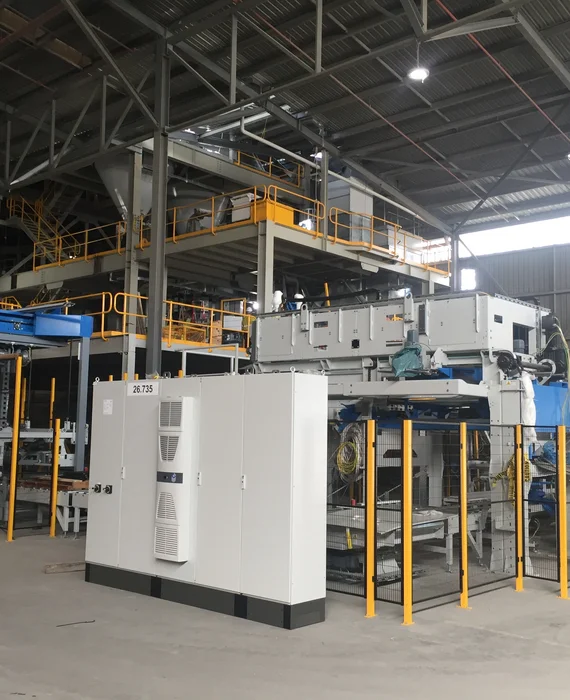
Having been impressed by the quality and performance of HAVER & BOECKER systems, Cockburn Cement selected the ROTO-PACKER® RVT14 with 14 spouts, the latest high-performance bagging technology, to replace its existing packaging equipment.
The RVT14 is capable of switching quickly between different products, requiring only 15 minutes of downtime for changeovers, significantly faster than older machines.
According to Dinesh Kapadia, Engineering Project Manager, Cement & Lime, Adbri Ltd:
“With HAVER & BOECKER’s advanced technology, we were confident that we could achieve our target of 4,800 bags per hour. It also enabled us to continue with a standardized technology platform, simplifying operations, maintenance, and spare parts management.”
The RVT14 also requires less maintenance, generates less waste, and produces cleaner bags.
Innovation in plant design
Due to space limitations within the facility, the RVT14 had to be installed in the exact location occupied by the existing packer and palletizer.
At the same time, ongoing demand from key customers meant that the removal of the existing packaging equipment and installation of the new system had to be completed without interrupting market supply. This created significant installation challenges. While inventory was being built up and the remainder of the plant continued operating, the shutdown window for decommissioning the old line and commissioning the new one remained extremely tight.
“A conventional construction approach would have required a substantial amount of time, estimated at around three months,” said Kapadia. “It would also have resulted in significant additional costs associated with inventory build-up and off-site material storage.”
Through innovative thinking, the Cockburn Cement team proposed an alternative solution.
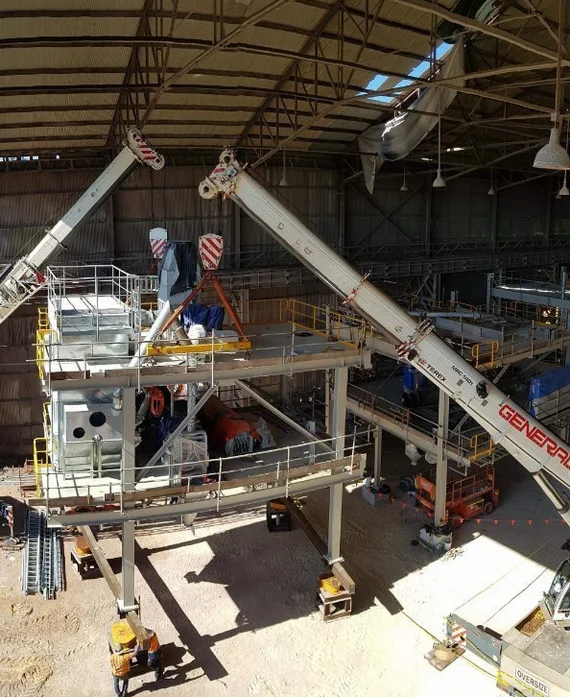
“We used HAVER & BOECKER’s high-quality detailed drawings to develop a modular design concept,” said James Keys, Project Manager at Cockburn Cement. “Prior to installation, the packaging system would be assembled in four modules outside the packaging area, in a location approximately 300 meters away from the plant.”
High-Capacity installation at record speed
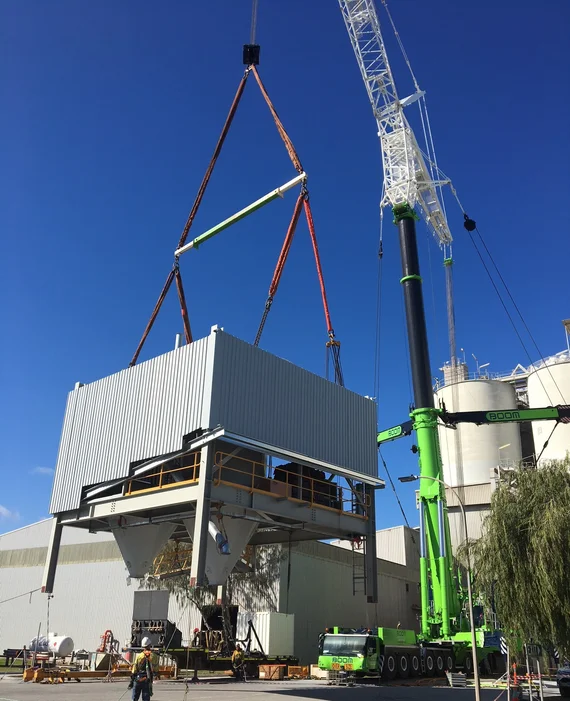
Once assembled, the modules were transported from the staging area to the installation site using Self-Propelled Modular Transporters (SPMTs).
The demolition of the existing machine was completed within 48 hours, providing a clean foundation for crane installation of the new system. Throughout the project, HAVER & BOECKER maintained up to three technicians on site to supervise and support the work.
“Cockburn Cement’s team built an excellent working relationship with HAVER & BOECKER’s personnel, from senior management through to the installation crews on site,” said Scata.
From shutting down the old machine to commissioning the new system, only 42 days elapsed, making it the fastest installation of a high-performance HAVER & BOECKER packaging plant ever completed.
“The modular construction approach significantly reduced the production outage compared to a conventional installation,” said Scata. “HAVER & BOECKER provided comprehensive on-site support and demonstrated a strong commitment to ensuring that all post-commissioning objectives were achieved.”
Commercial results
The new bagging plant achieves a rated capacity of 4,800 bags per hour for GP cement, delivering significant improvements in efficiency, reliability, and productivity.
The increased throughput allows Cockburn Cement to meet market demand within a single eight-hour shift, whereas two shifts were previously required.
Reduced operating hours enable maintenance work to be carried out during regular business hours, while the reuse of spilled and flushed material has helped minimize product waste.
Cleaner bags and improved product presentation have led to higher levels of satisfaction among both customers and employees.
Creating added value
According to Adam Scata, Operations Manager at Cockburn Cement:
“The modular installation approach carried its risks, but Cockburn Cement and HAVER & BOECKER managed them successfully together.
They provided outstanding support to our team in developing the innovative modular concept.”
This collaboration also included designing the packaging machine layout in close consultation with the Cockburn Cement project team, ensuring that the machine footprint was optimized to fit perfectly within the existing packaging hall.
“HAVER & BOECKER’s engineers also supported the implementation of the blend-back system, which allows all flush and waste material to be recycled,” Scata added. “This eliminated landfill waste entirely, resulting in both cost savings and improved sustainability performance.”
Additional efficiency gains were achieved through the introduction of a dual pallet dispenser, increasing throughput capacity. A pallet scanning system was also installed to strengthen quality control and improve health, safety, and environmental performance by ensuring stable pallet loads throughout warehouse operations.
 North American Website